
1
We find the exact adhesion by hand.
For the tightness that keeps coming back after every stretch: we hold the tension, you move, and the stuck tissue finally lets go.
What It Is
When a muscle gets overused or hurt, the tissue can lay down tiny bands of scar called adhesions. They glue together layers that are meant to glide. The muscle feels tight, short, and weak, and a nerve running through it can get trapped in the mess.
Active Release Technique goes straight at it. Your therapist finds the exact spot by hand, applies precise tension, and has you move the muscle through its full range. That combination breaks the adhesion and frees the nerve underneath.
Surfers and lifters know this one: the shoulder or hip that warms up fine, then locks again by the next session. You’re not imagining it, and stretching harder won’t undo scar tissue. This treats the actual tissue, by hand.
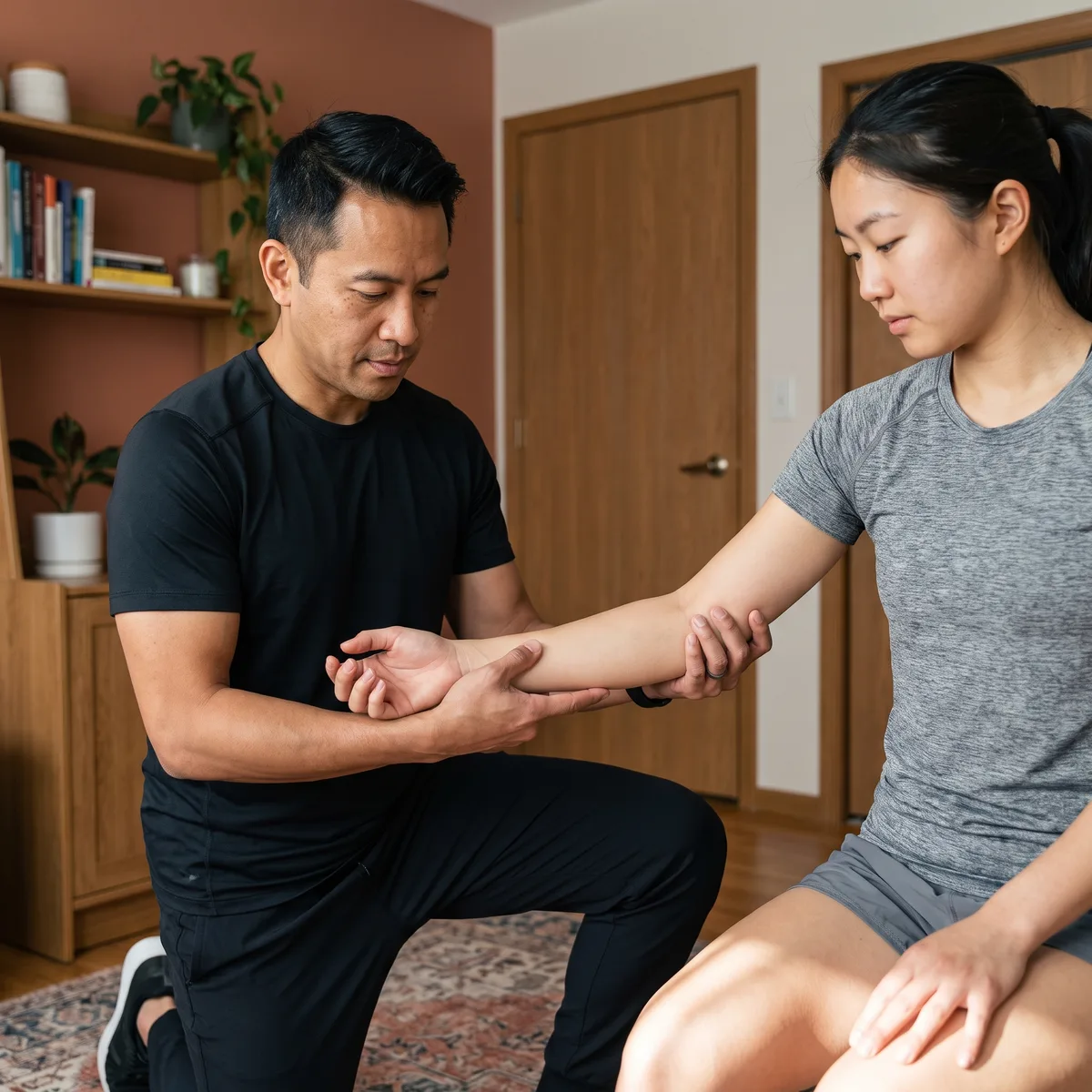 You set the pressure, always
What It Helps
If a muscle warms up, then locks right back, adhesions are usually why. Left alone, they pull on everything around them and the problem spreads.
What A Session Looks Like
1
We find the exact adhesion by hand.
2
We hold tension while you move through range.
3
We load the freed muscle, same visit.
Why It Works
Frees tissue stretching can’t reach.
Releases the nerve, not just the muscle.
You feel the change before you leave.
Restores glide, so range comes back.
Pairs Well With
Questions, Answered
You’ll feel firm pressure and a strong stretch for a few seconds as the adhesion releases, then it eases. Most people call it a good kind of sore, the spot that’s been bothering them finally getting worked. You control the pressure the whole time, and we tell you exactly what to expect before we start.
Massage works over a broad area while you stay still. Active Release is specific: your Doctor of Physical Therapy holds tension on one exact spot while you actively move the muscle through its range. That movement is what breaks the adhesion and frees a trapped nerve, which passive rubbing can’t do.
It depends on your plan, and we verify your exact benefits before your first session, so there’s no surprise on your bill. Active Release is usually billed as part of your physical therapy visit, not a separate charge. Questions before then? Call us at (949) 388-5692.
Book Your Visit
Request a time and a real person calls you back, usually within two business hours. No phone tree. No ‘someone will reach out.’ Just a plan.
5.0 · 112+ Google reviews
Typical response: under 2 business hours
Step 1 of 5
That’s the hard part done. We’ll call during business hours to lock in your time. Most people are on the schedule same week.
Visit Us