
Weeks 1–2
Pain
Calm it down fast.
Hands-on work settles the overworked shoulder, back, or neck and takes the edge off, so you’re moving without making it worse, starting your first visit.
What We Treat
The paddling shoulder that won’t fire. The lower back that locks on your pop-up. The neck and the wipeouts that add up. This is our home water, our founder is the founding medical director for the USA Olympic surf team, and it starts with a cause-first evaluation.
Sound Familiar?
Any of these? You’re a surfer, not a patient. We build the plan to get you back in the water, not just off the couch. Keep reading.
Why It Happens
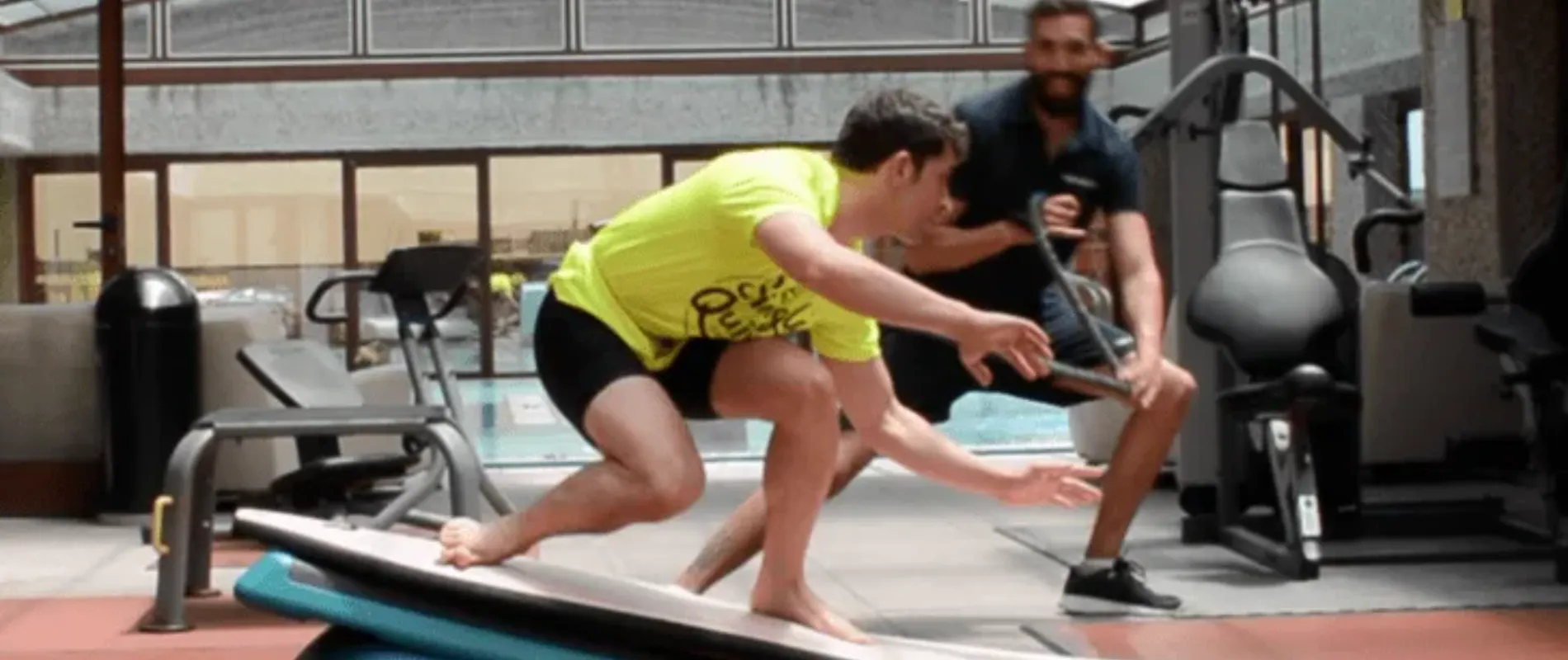
Surfing loads your body in ways nothing else does, and a surf injury is almost never just one thing. It’s usually some mix: a paddling shoulder that’s overworked and under-supported. A lower back that takes the force of every pop-up. Mid-back and neck stiffness from hours arched over your board. And a weak link, a hip, a core, a shoulder blade, that makes another area do too much.
None of that shows up if someone just treats the sore spot with rest and ice. It takes a real, cause-first evaluation from people who actually surf to find what’s driving it. Our founder is the founding medical director for the USA Olympic surf team, so we know the demands of paddling, popping up, and duck-diving firsthand. Fix the real cause, and you paddle out stronger than before.
The Honest Truth
Nobody regrets starting too early. Every week, someone in our clinic says they regret waiting.
How We Fix It
Every plan has an endpoint. Here’s what the four phases look like for a surf injury.
Weeks 1–2
Pain
Hands-on work settles the overworked shoulder, back, or neck and takes the edge off, so you’re moving without making it worse, starting your first visit.
Weeks 2–6
Prime
Targeted mobility work brings back the shoulder, spine, and hip range that paddling and pop-ups demand.
Weeks 6–10
Perform
Progressive strengthening fixes the weak link and builds the power your paddle, pop-up, and duck-dive rely on.
Weeks 10+
Prevent
Paddling, popping up, and duck-diving get tested under real load before you’re cleared to surf: that’s the endpoint, not just another appointment.
I’ve been in for two separate injuries now and the staff at DSC have put me on the path to recovery each time. My therapist helped me deal with a pinched nerve with a simple regimen, and gave me guidance that stayed valuable at home. This is a local’s go-to, and they have the surfboards to show it.
Shared by Robby C. · Repeat patient
A repeat visitor after two separate injuries
Patient, knowledgeable care that got him back on the path each time
Questions, Answered
Yes, it’s our home water and our specialty. Our founder is the founding medical director for the USA Olympic surf team, and our team treats the paddling shoulders, pop-up backs, and wipeout injuries that come with the sport every week. That means your evaluation is built around the real demands of paddling, popping up, and duck-diving, not generic advice. You get a cause-first evaluation and a plan with an endpoint aimed at getting you back in the lineup.
Usually not entirely. Total rest is rarely the fastest way back, because the weak link that caused the injury stays weak. Where it’s safe, we keep you moving and adjust how and when you paddle out while we rebuild the area, and we’re honest when a short break out of the water genuinely protects you. You get a clear return-to-water timeline from day one, not a vague wait until it feels better.
Some surfers are back within a week once the real cause is found, like a paddling shoulder that just needed the right fix. A fuller plan runs through all four phases, Pain, Prime, Perform, and Prevent, typically over 8–10 weeks for a stubborn or long-standing injury. Either way, you get a plan with an endpoint: cleared to surf, not an open-ended string of appointments.
Book Your Visit
Request a time and a real person calls you back, usually within two business hours. No phone tree. No ‘someone will reach out.’ Just a plan.
5.0 · 112+ Google reviews
Typical response: under 2 business hours
Step 1 of 5
That’s the hard part done. We’ll call during business hours to lock in your time. Most people are on the schedule same week.
Visit Us